
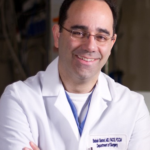
Dr. Babak Sarani, Chief of Trauma and Acute Care Surgery at George Washington University.
Featured in Malcolm Gladwell’s new book, trauma surgeon Dr. Babak Sarani discusses the hidden consequences of firearm injuries, the importance of timely trauma care, and why research collaboration matters.
When Malcolm Gladwell began researching his latest book, The American Way of Killing: The Invention of an Epidemic, he encountered a body of scientific research that challenged conventional assumptions about firearm injuries and survival. Among the researchers whose work caught his attention was Dr. Babak Sarani, The Chief of Trauma and Acute Care Surgery at George Washington University.
Looking beyond deaths
One of the book’s central arguments is that homicide statistics alone do not adequately capture the magnitude of firearm violence. Advances in emergency medicine, trauma surgery, and critical care have enabled many patients to survive 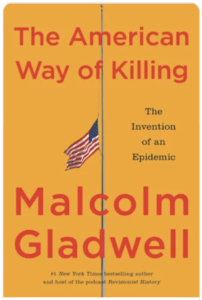 injuries that might previously have been fatal.
But survival does not necessarily mean recovery.
Sarani believes the public conversation must account for the lifelong consequences experienced by people who survive firearm injuries. “You should look at both death and disability for life. You should look at return to work for life. You should look at mental health even when you do return to work.”
He also emphasized the emotional consequences for the families of firearm victims and the healthcare professionals who treat severely injured patients. Even when clinicians have done everything medically possible, the experience of losing a patient can leave lasting emotional burdens. For Sarani, understanding firearm violence requires examining its full human impact—not simply counting fatalities.
Research that challenges assumptions
Sarani’s involvement with Gladwell began several years ago, when the author contacted him about research on civilian public mass shootings for his “Revisionist History” podcast. Sarani subsequently participated in a public television special called “Cascades” with Gladwell and firearm-violence survivor and advocate David Hogg.
The research featured in Gladwell’s book grew out of a collaboration among Sarani, emergency medicine physician E. Reed Smith, and critical care paramedic Geoff Shapiro. Their original intent was to examine autopsy findings from mass-shooting victims to better understand fatal injury patterns and identify opportunities for lifesaving intervention. The resulting publications challenged assumptions about the injuries most likely to cause death and the interventions most likely to improve survival.
In a 2019 study published in the Journal of the American College of Surgeons, the investigators examined 213 fatalities from 19 civilian public mass shootings. Approximately 15% of the deaths were judged potentially preventable.
Importantly, potentially preventable deaths frequently involved injuries to the chest rather than extremity hemorrhage. The findings suggested that effective emergency response must extend beyond tourniquet use to include rapid access to victims, appropriate lifesaving interventions, and timely transport to definitive care.
Sarani said the research contributed to changes in how emergency medical services and law enforcement approach mass-shooting incidents, including greater use of coordinated rescue task forces.
The investigators subsequently expanded their research to examine injury patterns associated with different firearm types, which is also cited in Gladwell’s book, and the characteristics of survivors. The survivor study, conducted through the Eastern Association for the Surgery of Trauma, involved 191 patients from 31 mass-shooting events. Together, these investigations demonstrate the importance of examining both fatal and nonfatal injuries when evaluating trauma outcomes.
In trauma, time matters
Another major theme of the conversation was access to trauma care. “In trauma, delay is death,” Sarani said.
He explained that patients injured in communities without timely access to trauma services face additional risks, even when their injuries might otherwise be survivable. Yet improving access does not necessarily mean building a Level I trauma center in every community.
Sarani described the important role that well-equipped Level III trauma centers can play in providing initial treatment, stabilizing seriously injured patients, and transferring those requiring more specialized care.
“You don’t need to have a level one trauma center next to you,” he explained. What communities cannot afford, he emphasized, is a total absence of trauma care capability. His comments reinforce the importance of coordinated regional trauma systems, appropriately distributed resources, and research that identifies effective approaches to improving access.
The challenges of conducting firearm injury research
Despite the importance of their findings, Sarani described substantial challenges in conducting and publishing the research. The investigators completed much of the work without dedicated funding. Research involving survivors required cooperation among trauma centers, institutional review board approvals, and data-sharing agreements.
Recruiting participating institutions was particularly difficult because individual mass shootings often involved relatively small numbers of survivors. Sarani also described challenges publishing studies with limited sample sizes, even when the findings had potentially important implications for clinical practice and emergency response.
His experience highlights a fundamental challenge in trauma research: rigorous investigation of relatively uncommon but devastating events often requires collaboration across institutions, disciplines, and geographic regions.
Sarani believes greater alignment among researchers, funders, professional organizations, and scientific publishers is essential. For CNTR, these challenges underscore the importance of sustainable research funding and the infrastructure needed to support multicenter investigations.
Collaboration over recognition
Perhaps Sarani’s most compelling message is his emphasis on transdisciplinary collaboration. He described the importance of bringing together expertise from emergency medicine, prehospital care, trauma surgery, forensic pathology, and biostatistics.
For Sarani, the objective is not professional recognition but meaningful improvements in patient outcomes. “Our mission is to save and change lives, not take credit.”
That philosophy closely reflects CNTR’s mission to advance trauma research through collaboration, coordination, and sustained investment.
Gladwell’s book raises important questions about how Americans understand firearm violence. Sarani’s research provides another essential perspective: scientific investigation can reveal opportunities to prevent deaths, improve trauma systems, and better understand the lifelong consequences of injury.
And when researchers across disciplines work together, their findings have the potential to change not only scientific understanding, but also the care patients receive.
Related reading
- The American Way of Killing: The Invention of an Epidemic — Malcolm Gladwell
- Smith ER, Shapiro G, Sarani B. The Profile of Wounding in Civilian Public Mass Shooting Fatalities. 2016.
- Smith ER, Sarani B, Shapiro G, et al. Incidence and Cause of Potentially Preventable Death after Civilian Public Mass Shooting in the US. 2019.
- Sarani B, et al. Wounding Patterns Based on Firearm Type in Civilian Public Mass Shootings in the United States. 2019.
- Sarani B, et al. Characteristics of Survivors of Civilian Public Mass Shootings: An EAST Multicenter Study. 2021.